
How to Improve Sandy Soil
Sandy soil drains water so fast your plants go thirsty within hours of watering. But here's the good news: it's one of the easier soil types to fix. Add organic matter consistently, and sandy soil transforms into a productive, healthy garden bed. This guide shows you exactly how to do it.
What Is Sandy Soil and Why Is It a Problem?
Sandy soil is made up of large, coarse particles with lots of air space between them. That structure is both the problem and the starting point for the solution.
The main issues with sandy soil
- Water drains through within minutes causing roots to dry out fast
- Nutrients leach away before plants can absorb them
- Soil temperatures spike in summer, stressing roots
- Low microbial activity means poor natural fertility
How to Test If You Have Sandy Soil
Before you reach for the compost, confirm what you're working with.
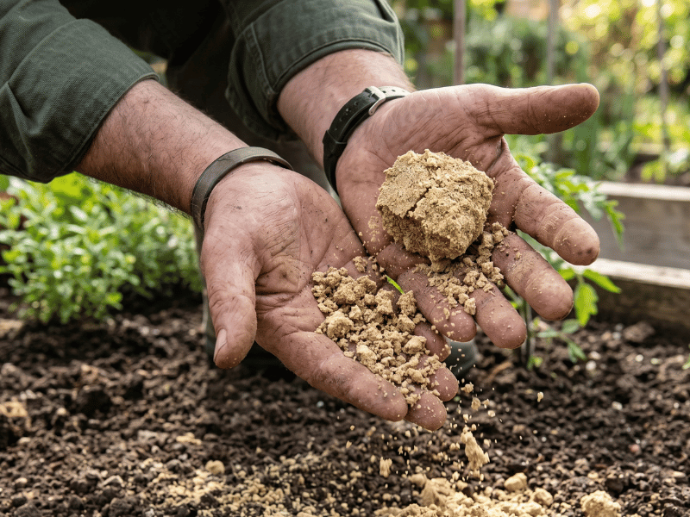
The squeeze test:
1. Take a handful of damp soil from your garden
2. Squeeze it firmly in your fist
3. Open your hand and observe
- Sandy soil: Crumbles immediately; won't hold a shape
- Loamy soil: Holds a loose ball that breaks apart when touched
- Clay soil: Forms a firm, sticky ball that holds its shape
If your soil crumbles apart, you have sandy soil. Time to amend it.
How to Improve Sandy Soil: 4 Steps That Work
The fix is straightforward: add organic matter. The more you add, the faster your soil improves. Here's how.
Step 1 Add Organic Compost
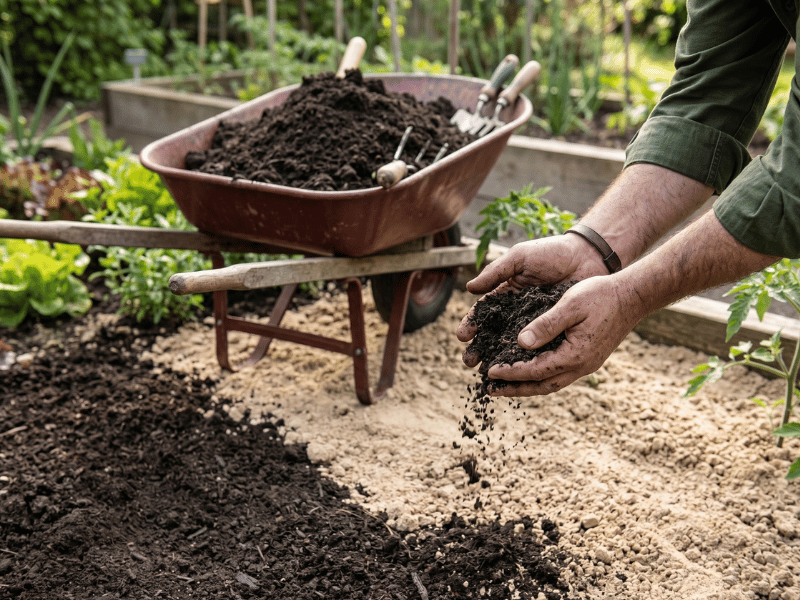
Compost is the number one amendment for sandy soil. It fills the gaps between sand particles, holds water, and feeds soil microbes.
How much to add:
- Minimum 1 barrowload (0.1 m³) per square metre
- For severely depleted soils, double this amount
- Good options include premium garden compost, aged manure, and mushroom compost
Shop Daisy's premium compost and soil improver range for bagged and bulk options delivered across Melbourne and Geelong.
Step 2 Dig It In Deep
Don't just scatter compost on top. Work it into the soil so roots can reach it.
1. Spread your compost evenly across the bed
2. Use a fork or spade to dig it in to around 100-150mm depth
3. Mix thoroughly as you go, you want an even blend, not layers
4. Break up any compacted patches
Deeper is better for anything with substantial root systems — vegetables, shrubs, and lawn areas benefit from going to 150mm.
Step 3 Top With Mulch
Mulch slows the breakdown of compost and dramatically reduces evaporation from sandy soil in summer.
Best mulches for sandy garden beds:
- Aged wood chip (breaks down slowly, feeds the soil)
- Straw (lightweight, great for vegetable gardens)
- Shredded bark (weed suppression and moisture retention)
Apply a 5-7cm layer and keep it clear of plant stems. Browse Daisy's mulch range for bulk and bagged options.
Step 4 — Maintain Annually
Sandy soil needs ongoing attention. Compost breaks down within 12-18 months, and nutrients leach quickly in warm climates.
Annual maintenance routine:
- Top-dress with a fresh 30-50mm layer of compost each year
- Refresh mulch when it thins out (usually once or twice a year)
Why Organic Matter Works: The Science in Plain English
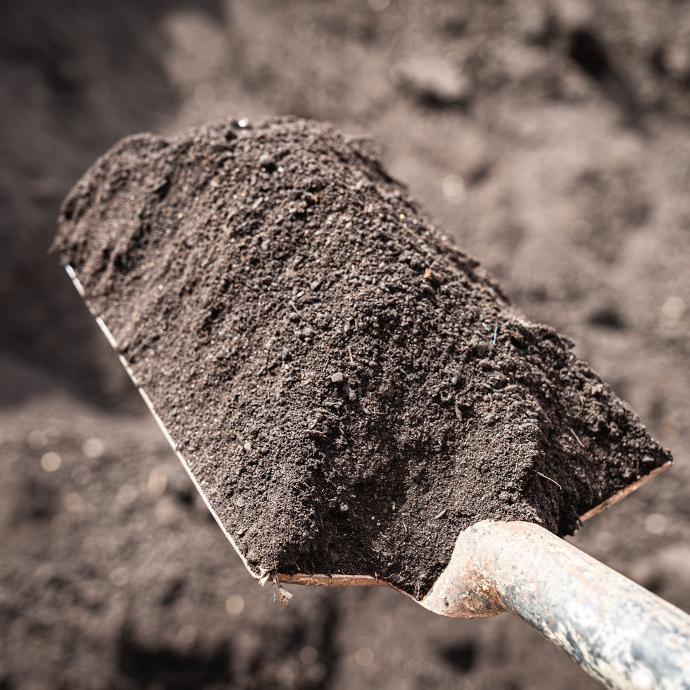
- Water Retention: Organic matter acts like a sponge. It clings to water molecules and slows drainage. More compost means more water available to roots between rain events and waterings.
- Nutrient Storage: Sandy soil can't hold nutrients — they wash past roots and disappear. Organic matter has a natural charge that attracts and holds nutrients, releasing them slowly as plants need them.
- Temperature Regulation: In an Australian summer, sandy soil can heat to levels that damage roots. Compost and mulch buffer temperature swings, protecting the root zone.
- Supporting Micro-organisms: Healthy compost brings billions of microorganisms. Bacteria break down organic matter. Fungi extend root reach. Earthworms aerate the soil and produce castings. All of this improves soil structure over time.
Plants That Actually Thrive in Sandy Soil
If you're establishing a new garden or want low-maintenance options, these Australian natives and adapted plants grow well in sandy conditions without heavy amendment:
- Coastal Banksia
- Tea Tree (Leptospermum)
- Westringia (Coastal Rosemary)
- Kangaroo Paw
- Hardenbergia
- Eremophila
- Geraldton Wax (Chamelaucium uncinatum)
- Lavender varieties
- Atriplex 'Silver Holly'
- Hardy succulents
These plants are adapted to low-nutrient, free-draining soils. They're a smart choice while you work on improving the soil elsewhere.
Is Sandy Soil Acidic or Alkaline?
Sandy soil is typically slightly acidic to neutral, but this varies by location. Coastal sandy soils near limestone formations can be quite alkaline (pH above 7.5), while inland sandy soils tend to be more neutral to mildly acidic.
Why it matters:
- Alkaline soils lock up nutrients like iron and manganese
- Acid-loving plants (blueberries, camellias) struggle in alkaline sandy soils
- A simple pH test kit will tell you where you stand
If your pH is above 7.5, add compost before planting pH-sensitive species.
How Long Does It Take to See Results?
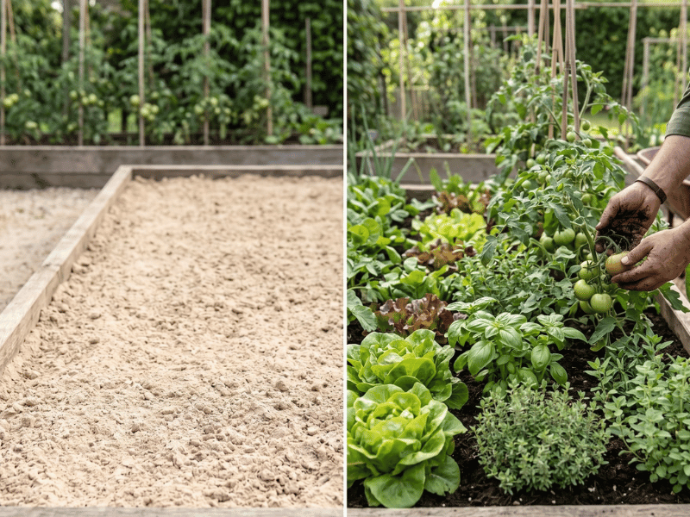
- Week 1-4 Improved water retention; soil holds moisture longer
- Month 2-3 Plants show visible improvement; new growth accelerates
- Month 6-12 Soil structure noticeably different; less frequent watering
- Year 2+ Self-sustaining soil with minimal annual input needed
Results are faster in cooler months when compost breaks down more slowly.
.
Frequently Asked Questions About Sandy Soil
What is the best soil improver for sandy soil?
Compost is the most effective amendment. Look for a quality garden compost or soil conditioner with high organic matter content. Mushroom compost works especially well in sandy soils because it's dense and retains moisture effectively.
How do I fix sandy soil in Australia?
The method is the same regardless of location: dig in compost at a minimum of 0.1 m³ per m², mulch heavily, and repeat annually. In Perth or other areas with highly sandy coastal soils, you may need to repeat the initial heavy amendment two to three times in the first year.
How much compost do I need?
For a standard 10 m² garden bed, you need a minimum of 1 m³ of compost for the initial treatment. That's 10 barrowloads. Budget for bulk delivery if you have a large area — it's far more economical than bags. Use Daisy's volume calculator to assist with measuring and calculating
Can sandy soil be permanently fixed?
Not permanently — sandy soil needs ongoing organic matter because compost decomposes over time. But with annual maintenance, the soil quality improves year after year and the amount of amendment needed decreases as the biological system establishes.
Ready to Start Improving Your Sandy Soil?
Daisy's Garden Supplies stocks premium composts, soil improvers, and mulches in bulk and bag options, with delivery across Melbourne and Geelong.
Visit us in-store for expert advice on which products suit your specific soil and climate or browse our soils and mulches range online and get it delivered to your door.