Both timber and concrete sleepers work well for low retaining walls, but they don't suit every situation equally. Timber is easier to handle and cuts down on cost upfront. Concrete lasts longer and holds up better in wet ground. Choosing the wrong one won't cause a disaster, but it might cost you more money down the track. Here's the honest breakdown.
Can You Use Sleepers as a Retaining Wall?
Yes, sleepers are one of the most popular materials for retaining walls in Australian backyards, and for good reason. They're strong, relatively simple to work with, and they look good once they're in the ground.
Both timber and concrete sleepers work the same basic way: you set steel H-posts into the ground, then slot the sleepers horizontally between them. No mortar, no concrete base, no specialist equipment. Most people with a bit of DIY confidence can do a wall under a metre themselves over a weekend.
One important note: this guide covers DIY retaining walls under 1 metre. Walls taller than that sit in different territory - they may need an engineer's sign-off and council approval depending on your local rules. When in doubt, check with your council before you start digging.
Timber Sleepers - Good for Smaller Walls and Garden Beds
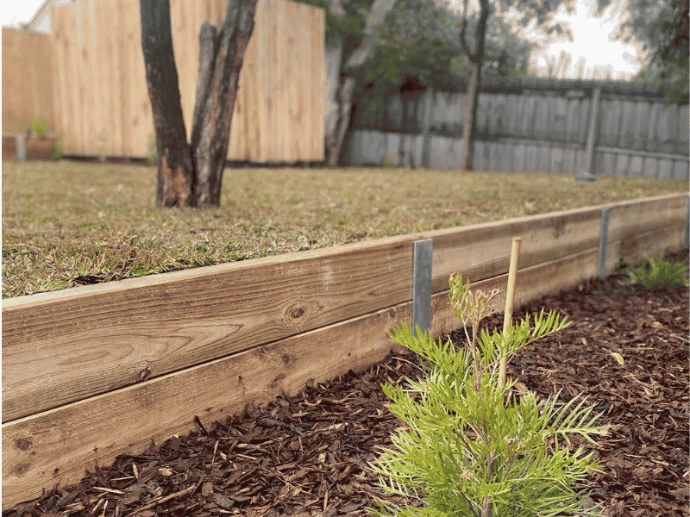
Treated pine is the go-to for most DIY retaining walls. It's lighter than concrete, straightforward to cut with a standard circular saw, and noticeably cheaper per sleeper.
Timber sleepers work best for:
- Garden bed borders and terracing
- Situations where you need to cut and shape on-site
- Tighter budgets
The trade off is lifespan. Even treated pine will eventually rot when it's in ongoing contact with damp soil. In a Melbourne or Geelong backyard with good drainage, treated pine sleepers typically last up to 20 years. In poorly drained ground, that number drops. If you're building something you want to last a generation, concrete is worth the extra cost.
Daisy's stocks treated pine sleepers and used railway sleepers across our Melbourne and Geelong stores. Available for both pickup and delivery.
Concrete Sleepers - Built to Last
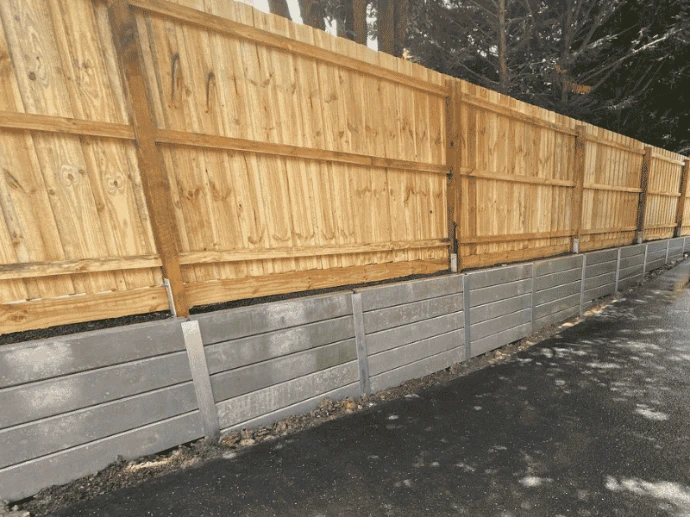
Concrete sleepers are heavier, more expensive upfront, and you'll need a mate to help lift them - but they don't rot, they don't warp, and they're not going anywhere. For walls close to a fence line, near irrigation, or in ground that stays wet, concrete is almost always the better long-term choice.
They come in a range of colours and finishes, so if the look of the wall matters as much as the function, concrete gives you more options.
Concrete sleepers work best for:
- Walls in consistently wet or reactive soil
- Anywhere near fences, driveways, or paved areas
- When longevity matters more than upfront cost
- Taller DIY walls approaching the 1 metre mark
The main downsides are weight and cost. You can't carry a concrete sleeper by yourself, and you can't cut them with a standard saw - if you need to trim one, that's a job for an angle grinder with a diamond blade, or a concrete saw.
Daisy's are able to deliver concrete sleepers all across Melbourne and Geelong.
Timber vs Concrete at a Glance
| Treated Pine | Concrete | |
|---|---|---|
| Upfront cost | Lower | Higher |
| Weight | Light - manageable solo | Heavy - two people needed |
| Lifespan | Up to 20 years (well drained) | Up to 50 years (properly engineered, installed, and maintained) |
| DIY difficulty | Easy to cut and handle | Harder to cut, harder to lift |
| Best height | Under 600mm | Up to 1m (DIY) |
| Wet ground performance | Fair - will eventually rot | Excellent |
| Finish options | Natural timber look | Range of colours and textures |
| Cheapest long-term? | Not always - may need replacing | Often yes, over 20+ years |
What About Height? Keep It Under a Metre for DIY
As a general rule, DIY sleeper retaining walls should stay under 1 metre. Below that threshold, a well-built wall using treated pine or concrete sleepers with proper H-posts and drainage will hold safely for years.
Above 1 metre, the engineering gets more complex. The lateral pressure on a wall increases significantly with height, and in most states, walls over a certain height require a building permit or an engineer's certification. Rules vary by council and by how close the wall is to a boundary or structure, so it's worth a quick call to your local council before you start if you're anywhere near that threshold.
For most backyard retaining and terracing jobs - edging garden beds, levelling a lawn, managing a gentle slope - you won't need to go anywhere near a metre anyway.
Don't Forget Drainage
This is the step most people skip, and it's the reason most retaining walls fail early.
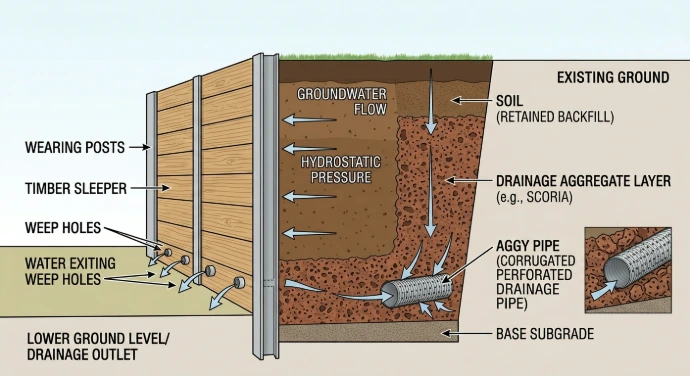
Water builds up behind any retaining wall. Without somewhere to go, that pressure pushes against the wall from behind - and eventually wins. The fix is simple: a layer of drainage scoria behind the wall, and weep holes or agricultural pipe at the base to let water escape.
If you're building on flat-ish ground with reasonable drainage, a 200mm band of scoria behind the sleepers is usually enough. On steeper sites or in heavy clay, a slotted aggy pipe at the base and a drainage layer running the full height of the wall gives you much better protection.
Daisy's stocks Scoria and agricultural pipe all stores. Available for pickup and delivery. Shop Drainage & Ground Prep.
Getting drainage right adds maybe an hour to the build and a bit to the materials cost. Skipping it adds years off the wall's life.
Frequently asked questions
Here are some common questions about retaining wall sleepers.
For most DIY walls under 600mm, treated pine sleepers are the practical choice - affordable, easy to handle, and perfectly capable. For anything taller, near water, or in ground that stays wet, concrete sleepers are worth the extra investment.
Treated pine sleepers with steel H-posts is the most affordable sleeper option. Railway sleepers are another popular choice - they're chunky, look great, and can be picked up second-hand - though they vary in condition and aren't always consistent in size. Daisy's stocks railway sleepers if you want to take a look at what's available.
A 50mm sleeper (200x50mm treated pine) is generally fine for low garden bed borders - walls up to around 300–400mm. For anything taller or carrying more soil pressure, step up to a heavier section.
A common rule of thumb is to bury at least one-third of the post length below ground - so for a 600mm wall, you'd want at least 300mm of post in the ground. For softer or sandy soils, go deeper. The posts do most of the structural work, so don't shortchange them.
For walls under 1 metre, most councils don't require a permit - but rules vary. Always check with your local council before you start, particularly if the wall is near a boundary, a driveway, or an existing structure.
Whether you're going timber or concrete, we've got the sleepers, H-posts, and drainage materials to get the job done. Browse our sleepers range online or visit your nearest Daisy's store across Melbourne,Geelong and Mornington Peninsular - our team can help you work out quantities and pick the right product for your site.