Here are some common questions about our bagged 10mm Pine Bark
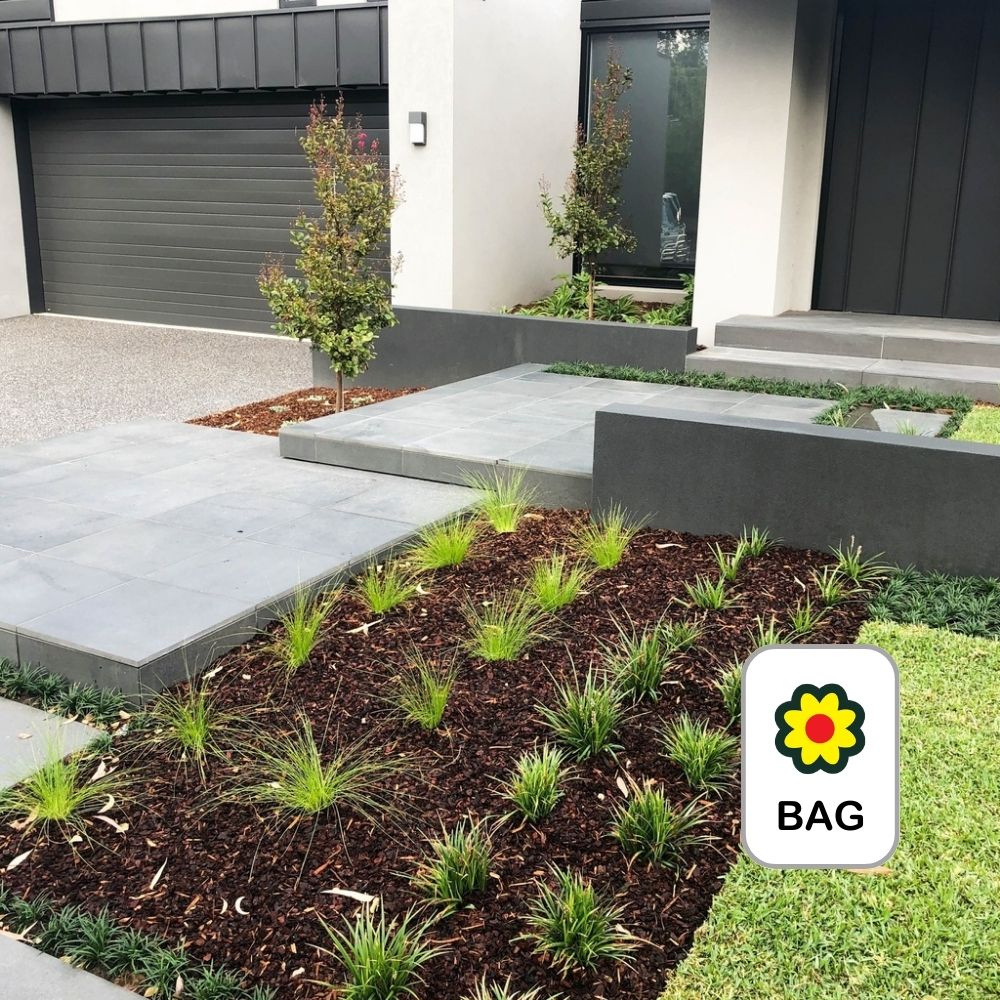
10mm Pine Bark suits garden beds, feature plantings, and cottage-style gardens where a neat, manicured finish matters. Its smaller, uniform nugget size makes it a popular choice for high-profile or formal landscaping.
10mm Pine Bark gives a finer, tidier finish and works well in smaller or more formal beds. 20mm Pine Bark is heavier and more wind-resistant, better suited to larger open areas, slopes, or exposed sites. Both are undyed and long-lasting, it comes down to the look and the site conditions.
Yes, 10mm Pine Bark is untreated and undyed, so there's no added chemical or dye to worry about. As with any mulch, it's a good idea to discourage pets from chewing or ingesting large amounts, but the bark itself isn't toxic (unlike cocoa mulch, which should never be used around pets).
Pine bark itself isn't a food source for termites the way structural timber is, but any organic mulch kept in prolonged contact with a building's foundation or timber structures can create a moist environment termites are drawn to. Keep mulch at least 50mm clear of foundations, decking, and timber structures as a precaution.
Being untreated and undyed, 10mm Pine Bark breaks down more slowly than dyed wood mulches, so it typically needs topping up less often. Re mulching every 1-2 years is recommended.
There are approximately 25 bags in a cubic meter.
Please note: While we aim for consistency, slight colour variations from online images may occur due to the natural and recycled materials used. For the most accurate colour representation, we recommend visiting one of our stores before placing a large order.
Calculate how much sand, soil, mulch or gravel you need for your project. Add multiple areas and we'll total it up for you.