
TifTuf Grass: The Complete Guide to Australia's Top Bermuda Turf
TifTuf Hybrid Bermuda is one of Australia's most technically advanced lawn varieties. Bred over 25 years by the University of Georgia and selected from more than 30,000 Bermuda genotypes, it holds the Smart Approved WaterMark for water efficiency and comes with a 10-year Lawn Solutions Australia product warranty.
It uses 38% less water than comparable grasses, recovers faster from wear than most couch varieties, and maintains its colour longer into winter. It's a strong choice for Melbourne's climate. Hot summers, periodic drought, and plenty of UV. If you understand its sun requirements and what "low-maintenance" actually means in practice.
What Are the Key Aspects of TifTuf Hybrid Bermuda?

Drought Resistance
Very High

Shade Tolerance
Up to 50%

Wear Tolerance
Very High

Maintenance Level
Very Low
Leaf Type
Fine
Root Establishment
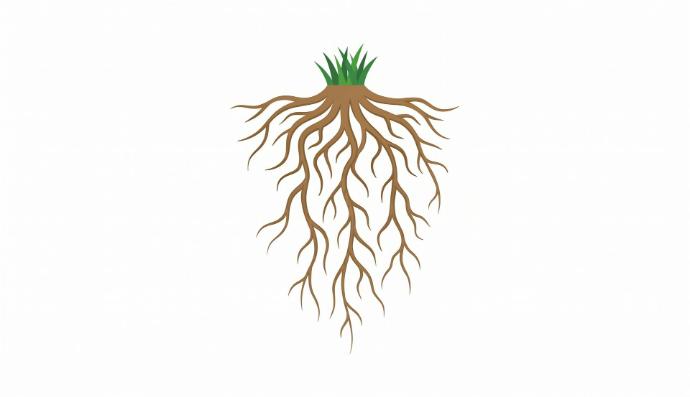
75% faster
Why TifTuf Uses Less Water
This is TifTuf's headline claim, and it's backed by the Smart Approved WaterMark, an independent Australian certification for water-efficient products.
Two mechanisms explain the water efficiency:
- Rapid, deep root establishment. TifTuf's roots establish up to 75% faster than other turf varieties, reaching moisture deeper in the soil profile sooner. A shallow-rooted lawn needs frequent watering to keep the surface moist; a deep-rooted lawn draws on reserves further down.
- Drought dormancy behaviour. Rather than dying in drought conditions, TifTuf goes semi-dormant, retaining root health below ground and recovers rapidly when water returns.
For Melbourne households under Stage 1 or 2 watering restrictions, or those with high water costs, this difference is meaningful
How to Maintain TifTuf Hybrid Bermuda
Mowing
TifTuf can be mown anywhere from 8mm to 36mm for residential use. The fine blade texture allows lower mowing heights without the scalping issues common to coarser grasses.
Practical tips:
- Never remove more than one-third of the blade in a single mow
- Cylinder mowers give the best finish at low heights; rotary mowers work well at 20mm+
- Sharp blades are critical — TifTuf's fine blades tear rather than cut with dull mower blades, causing browning
- Winter: Reduce frequency as growth slows. Avoid mowing below 15mm in winter
- In extreme heat (30°C+): Do not scalp — leave the canopy for shade and moisture protection
Fertilising
TifTuf is genuinely low-maintenance on fertiliser compared to other couch varieties. The recommended schedule:
- August (end of winter): Apply LSA Lawn Fertiliser at 1kg per 100m² to kick off spring growth
- December (summer): Second application to sustain active growth
- March (end of summer): Final application to build root reserves before winter
For winter colour: apply liquid iron in June or July. This maintains green pigmentation without stimulating excessive growth.
A note on over-fertilising: TifTuf doesn't need it. Excessive nitrogen promotes vertical growth, requiring more mowing and making the canopy more prone to disease. When in doubt, less is more.
Watering
Newly laid (weeks 0–4): Water 2–3 times daily. Never let it dry out during establishment this is when root contact is being established.
Establishing (weeks 4–6+): Gradually reduce frequency:
1. Daily → every second day → once weekly
2. Target: one deep soak (1–2 hours) per week to encourage deep root growth
Established: Once established, TifTuf rarely needs supplemental watering outside of extended dry periods. Its deep root system accesses subsoil moisture. Even in Melbourne summer, a well-established TifTuf lawn needs no more than 12mm of water per week under normal conditions.
In drought: Water early morning or late evening to minimise evaporation. Focus on deep, infrequent watering rather than shallow daily irrigation.
Weed and pest control
TifTuf's dense growth habit is its primary weed defence — a thick, healthy TifTuf canopy leaves little room for weed germination.
For proactive weed management:
- Apply a fertiliser + oxadiazon pre-emergent combination in spring and autumn
- For sandy soil profiles, alternate liquid and granular fertilisers monthly to maintain consistent nutrition
Dethatching and overseeding
TifTuf produces less thatch than many other couch varieties due to its lower stolonisation rate requirement (only 2–5%, versus ~10% for standard couches).
If thatch does build up: scarify or dethatch in late spring or early summer when growth is active, then follow with fertiliser and deep watering.
Overseeding: Generally not required for residential lawns. TifTuf maintains reasonable green cover through winter without overseed. For elite or sports turf requiring year-round TV-quality colour, winter overseeding with ryegrass is an option though ryegrass removal product is needed at season's end to prevent competition with TifTuf in spring.
How to Install TifTuf Instant Turf
Site preparation
1. Remove existing grass and weeds (herbicide or manual removal)
2. Rotary hoe the top 100mm to loosen compacted soil
3. Add a layer of sandy garden loam Daisy's Lawn Mix is perfect for this
4. Check and adjust pH — TifTuf prefers 6–7.5. Add lime if soil is too acidic
5. Add water storage crystals to improve moisture retention in free-draining soils
6. Lay on a 50–100mm bed of quality predominated sand turf underlay for best results
7. Do not apply starter fertiliser before laying this promotes vertical growth and early scalping. Apply it 4–6 weeks after establishment
Laying the turf
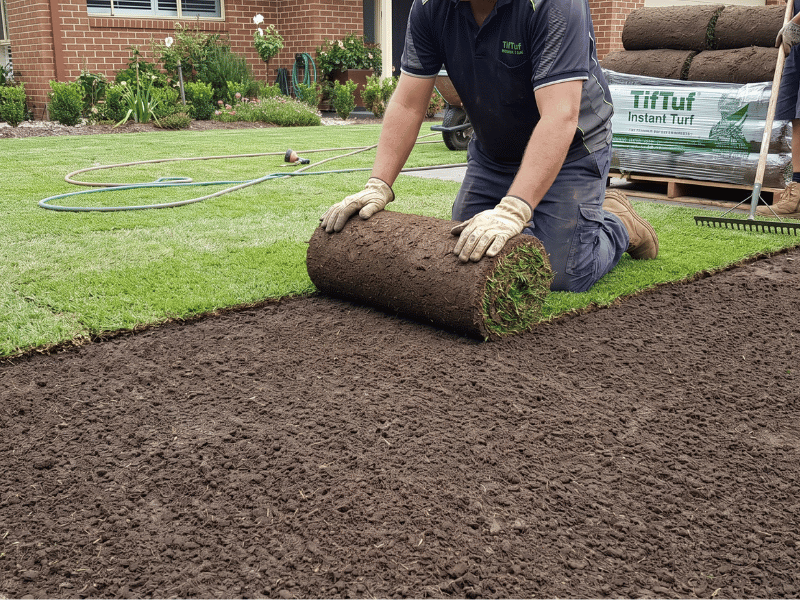
1. Start from the furthest point and work toward your exit
2. Butt joins tightly — no gaps
3. Lay in a brick-work (offset) pattern
4. Trim around edges with a sharp knife
5. Water immediately after laying
Post-install care
- Saturate the soil bed for the first 10 days
- First mow: within 5 days of laying, or as soon as roots grip firmly
- Gradually reduce water from week 4 as roots establish
Best time to lay: Spring and early summer. Winter laying is possible but establishment is slower. Budget 8–12 weeks vs the standard 3–6 weeks in warm conditions.
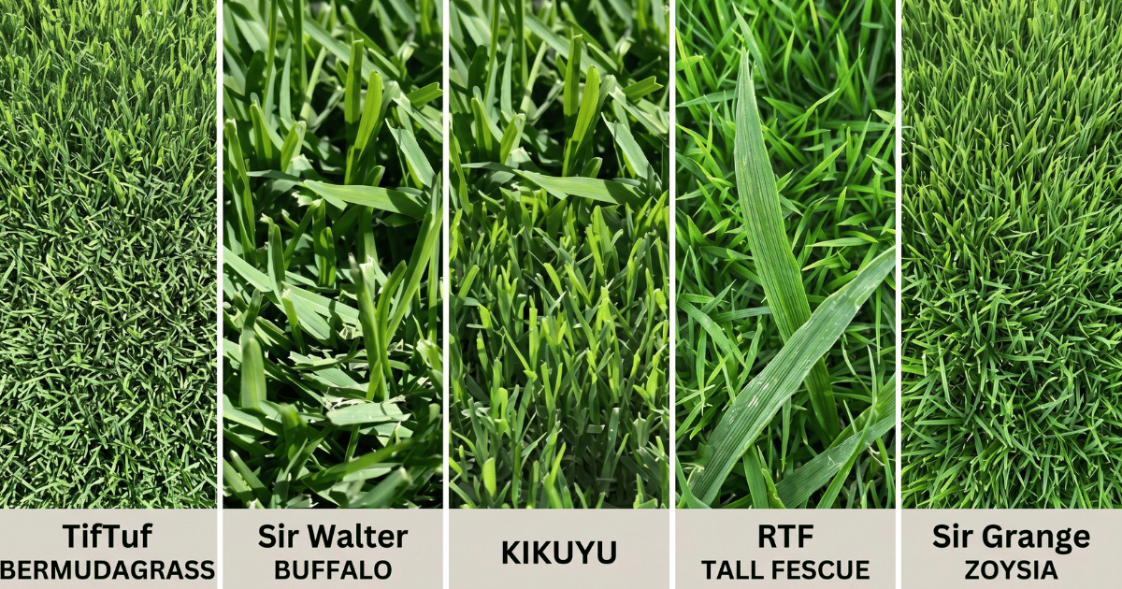
Grass Type | TifTuf Bermuda | Sir Walter Buffalo | Eureka Kikuyu | RTF Tall Fescue | SIR GRANGE ZOYSIA
|
Drought tolerance | Very high | High | Medium | High | Very high |
Shade tolerance | Up to 50% | Up to 70% | Up to 25% | Up to 80% | Up to 75% |
Wear tolerance | Very high | High | High | Medium | High |
Leaf type | Fine Blade | Broad blade | Medium blade | Fine blade | Fine blade |
Water use | 38% less than avg | Moderate | Moderate-high | Moderate | Up to 50% less than avg |
Winter colour | Good (with liquid iron) | Good | Average | Excellent (cool-season) | Poor (goes dormant) |
Maintenance level | Very low | Low | Medium (manages runners) | Low | Very low |
Mowing height | 8–36mm | 25–50mm | 20–25mm | 35–55mm | 10–50mm |
10-yr warranty | Yes | Yes | Yes | Yes | Yes |
- Choose TifTuf if: You want the best drought performance, fine texture, and low maintenance and you have good sun.
- Choose Sir Walter if: You have significant shade (TifTuf at 50% shade is less reliable than Sir Walter at 70%).
- Choose Eureka Kikuyu if: You want maximum coverage speed and lowest cost per sqm, and you don't mind managing runners.
- Choose RTF Tall Fescue if: You have heavy shade or want a cool-season grass that stays green through winter without liquid iron.
- Choose Sir Grange if: You want a premium fine-blade lawn with very low maintenance, excellent shade tolerance, and minimal watering once established and you're happy to wait for it to fully establish before putting it under heavy use.
The 10-Year TifTuf Warranty
Every roll of TifTuf sold through authorised dealers including Daisy's comes with a 10-year product warranty from Lawn Solutions Australia. This covers genetic purity: you're guaranteed to receive certified TifTuf Hybrid Bermuda, not a generic Bermuda substitute.
This matters because Bermuda grass varieties vary considerably in quality. Uncertified Bermuda can have inferior drought tolerance, higher maintenance needs, and poor wear recovery compared to certified TifTuf.
Why Is TifTuf the Best Instant Turf for Drought-Prone Areas?
Australia’s harsh climate, characterised by dry summers and frequent droughts, demands a turf variety that can withstand such conditions. TifTuf Hybrid Bermuda is the ideal choice for drought-prone areas, proven to require 38% less water than other grass varieties.
How Does TifTuf Excel in Drought Conditions?
- Water Efficiency: Recognised with the Smart Approved WaterMark for its water-saving properties.
- Rapid Root Establishment: TifTuf establishes roots up to 75% faster than other varieties, making it quick to settle.
- Saves Time, Money, and Effort: Minimal water requirements reduce maintenance costs and efforts.
Frequently Asked Questions
What is TifTuf Hybrid Bermuda?
TifTuf Hybrid Bermuda is a certified couch/Bermuda grass variety developed by the University of Georgia over 25 years. It was selected from 30,000+ experimental genotypes for its superior drought tolerance, wear recovery, fine leaf texture, and water efficiency. It holds the Smart Approved WaterMark and a 10-year Lawn Solutions Australia warranty.
Is TifTuf good for Melbourne?
Yes, well-suited. Melbourne's hot, dry summers are exactly the conditions TifTuf was engineered for. It handles the UV intensity and water restrictions common in summer, and maintains reasonable colour into autumn. It's less suited to Melbourne's shadier garden beds. Consider Sir Walter Buffalo for shaded areas.
How much water does TifTuf need?
38% less than comparable warm-season grasses. Once established (typically 6+ weeks after laying), TifTuf needs no more than 12mm of water per week in normal summer conditions — achievable with a single weekly deep soak.
Can TifTuf grow in shade?
TifTuf has better shade tolerance than Kikuyu but is not a shade specialist. It needs a minimum of 4.5 hours of direct sunlight daily. In areas with more than 50% shade, Sir Walter Buffalo is the better choice.
TifTuf vs Sir Walter — which is better?
Neither is universally better they suit different conditions. TifTuf wins on drought tolerance, water efficiency, wear recovery, and fine texture. Sir Walter wins in shade tolerance and is generally more forgiving in a wider range of growing conditions. If you're in full sun with water efficiency as a priority, TifTuf. If you have moderate to heavy shade, Sir Walter.
How long does TifTuf take to establish?
3–6 weeks in spring/summer. In winter, allow 8–12 weeks. First mow should happen within 5 days of laying (or when roots grip firmly) to encourage lateral spread.
Why Is TifTuf the Best Instant Turf for Drought-Prone Areas?
Australia’s harsh climate, characterised by dry summers and frequent droughts, demands a turf variety that can withstand such conditions. TifTuf Hybrid Bermuda is the ideal choice for drought-prone areas, proven to require 38% less water than other grass varieties.
Shop TifTuf at Daisy's
We deliver TifTuf Hybrid Bermuda Instant Turf across Melbourne and Geelong. Daisy's also stock all materials and accessories for instant turf such as White Washed Sand and Turf Sand for top dressing along with Lawn Seed and Care Products.